
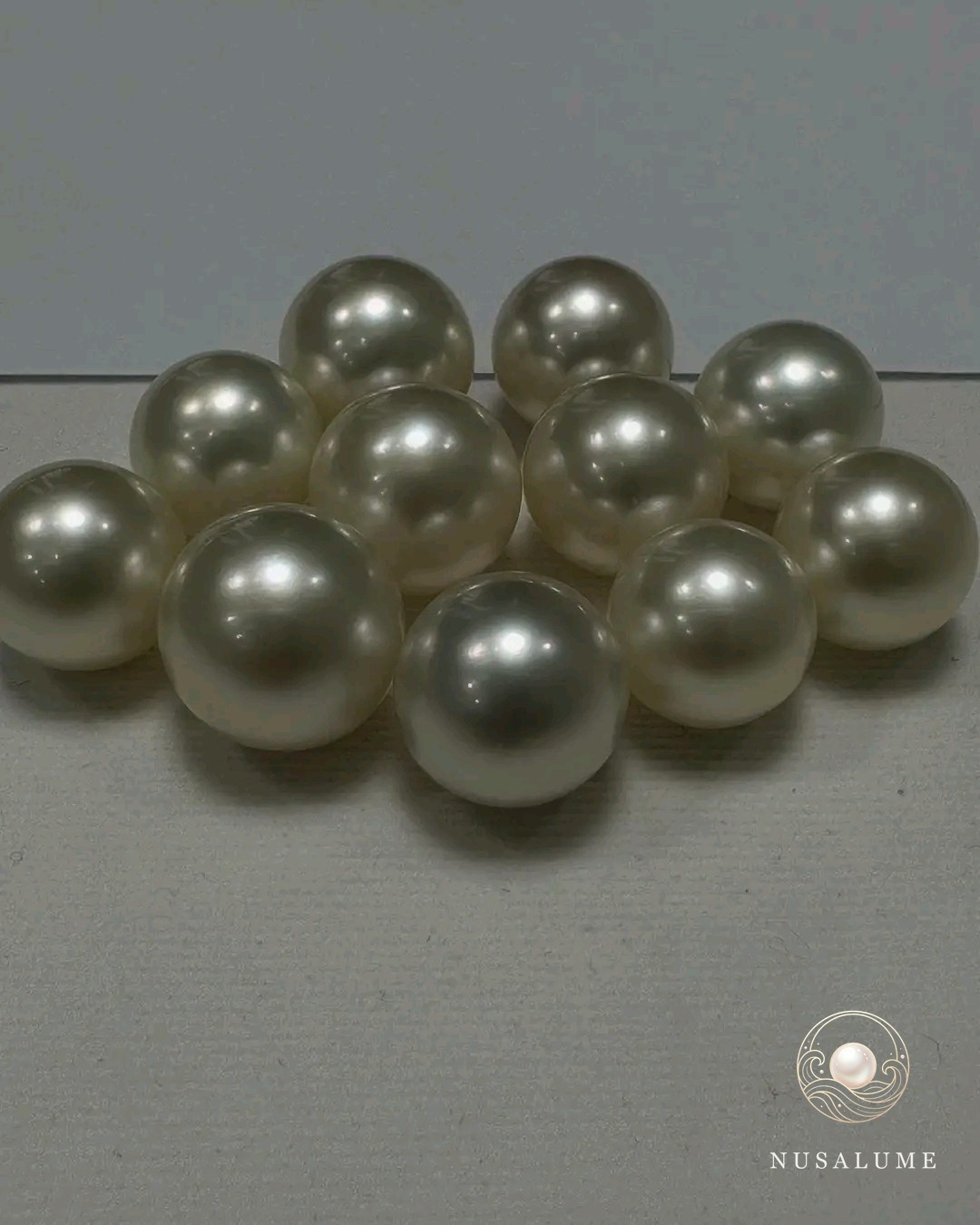
The Silent Crisis of Pearl Enhancement
In the global gemstone market, disclosure is the cornerstone of trust. While heat treatment in sapphires and oiling in emeralds are widely recognized and regulated, the pearl trade harbors a less-discussed reality: a substantial portion of commercially available South Sea pearls undergo artificial chemical manipulation before reaching retail display cases.
Chemical bleaching, gamma radiation, dye infusion, and artificial resin tumbling are frequently deployed to disguise low nacre density, mask organic blemishes, or artificially manufacture deep golden hues.
For high jewelry ateliers, setting a treated pearl in a bespoke six-figure commission carries immense reputational risk. Over time, chemically altered nacre dries, crazes, and fades. Discerning goldsmiths and certified gemologists must master the diagnostic methodologies required to separate natural organic specimens from chemically enhanced imitations.
1. Common Artificial Treatments in the Pearl Market
A. Bleaching (Hydrogen Peroxide / Chemical Oxidation)
- Objective: Remove natural melanin spots and lighten dark organic deposits within white pearls to produce a uniform, commercial "paper white."
- Impact on Nacre: The oxidizing agent breaks down the protective conchiolin proteins binding the aragonite platelets. Over 3–5 years, bleached pearls turn brittle, lose their optical orient, and develop a dull, chalky surface patina.
B. Dye Infusion (Organic and Metallic Salt Dyes)
- Objective: Transform low-grade white or pale yellow pearls into high-value "deep gold" specimens.
- Diagnostic Danger: Dye compounds penetrate porous areas of nacre unevenly, concentrating in microscopic fissures and around the drill hole.
C. Gamma Radiation
- Objective: Darken the freshwater or marine nucleus beneath thin nacre layers to simulate Tahitian black or dark golden overtones.
- Impact: Destabilizes organic matter within the core, often causing internal decomposition and foul odor upon subsequent drilling.
2. Diagnostic Testing: The Gemologist’s Bench Protocols
- LABORATORY AUTHENTICATION PATHWAY
- 1. Microscopic Drill Hole Exam Pigment concentration?
- 2. Longwave UV Fluorescence Inert vs. Natural Glow
- 3. High-Mag Surface Inspection Aragonite step pattern
- 4. Raman / Visible Spectroscopy Natural Lipochromes
Step 1: 50x Microscopic Drill-Hole Inspection
The most decisive preliminary test for artificial dye is examination of the drill canal using fiber-optic lighting under 30x–50x magnification:
- Natural Untreated Pearl: The cross-section of the nacre reveals uniform, translucent cream or golden layers extending uninterrupted from the nucleus to the perimeter. Conchiolin margins appear pale amber.
- Artificially Dyed Pearl: Unnatural concentrations of pigment collect in microscopic fissures around the entrance of the drill hole. The nacre layers near the nucleus often show dark color banding where the dye pool accumulated during immersion.
Step 2: Ultraviolet Fluorescence (LWUV / SWUV)
Natural Golden South Sea pearls exhibit a characteristic diagnostic signature under Longwave Ultraviolet light (365 nm):
- Untreated Natural Gold (Pinctada maxima): Emits a weak to moderate brownish-orange, dull orange, or greenish-yellow fluorescence, produced by the excitation of natural organic lipochromic porphyrins.
- Chemically Dyed Golden Pearl: Typically displays inert (zero) fluorescence, or emits an unnatural bright chalky green or blue response caused by synthetic dye carriers.
Step 3: Raman Spectroscopy (The Gold Standard)
For high-value unmounted specimens, non-destructive Raman spectroscopy provides definitive chemical verification:
- Natural yellow-to-golden South Sea pearls display distinctive Raman resonance peaks at approximately 1157 cm⁻¹ and 1528 cm⁻¹, corresponding to the carbon-carbon single and double bond stretching vibrations of natural carotenoid (lipochrome) pigment molecules.
- Artificially dyed pearls either lack these peaks entirely or show broad, distorted spectra corresponding to synthetic azo or metallized dyes.
3. The Nusalume Protocol: Unflinching Authenticity
At Nusalume, we hold that true luxury cannot coexist with chemical deception. Our harvest protocol enforces three strict covenants:
- Zero Chemical Bleaching: Every warm white and champagne pearl emerges from the sea unaltered. If a pearl displays a natural organic shadow or birthmark, we celebrate it as proof of life rather than masking it with corrosive acids.
- Zero Color Infusion: Our golden hues are biological achievements born of Lombok’s mineral waters and the genetics of the gold-lipped oyster.
- Mechanical Tumbling Prohibited: We do not tumble our gems in polishing abrasives. The mirror luster of our L-I and L-II grades is the unassisted creation of the mantle epithelium.
Summary for the Atelier
When commissioning fine jewelry that will endure for centuries, authenticity is not a marketing term—it is a measurable gemological truth. Always demand verified provenance documentation that guarantees untreated status.
Authentication Inquiries: Every Nusalume loose pearl is accompanied by the Lume Passport, providing documented confirmation of natural, untreated nacre.